Even though knives are among the most used tools in the kitchen, their care and maintenance often get overlooked. Without proper care, knives can get dull and even chip, making them less effective and more dangerous. Although it is counterintuitive, a dull knife is more dangerous than a sharp one because it requires more force to cut making it more likely to slip off in the wrong direction and cut the user. Here are a few tips that can help you maintain your knives so that they are both safe and easier to use:
1. Keep knives away from the dishwasher, drying rack, or other dishes. Aside from the obvious safety concerns that come with mixing in sharp knives with your other dishes, it is also one of the most common causes of damage. To avoid dulling and nicking the blade, wash your knife by hand with soap and water and allow it to air dry alone on a towel.
2. Store knives correctly. Ideally, your knife blade should never come into contact with anything else during storage. The best options are magnetic wall strips, knife blocks, knife cases, or plastic blade covers. If you don't have any of those things, you can also wrap a knife blade in a towel during storage to protect it.
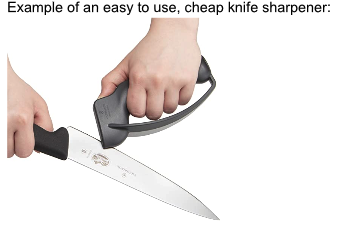
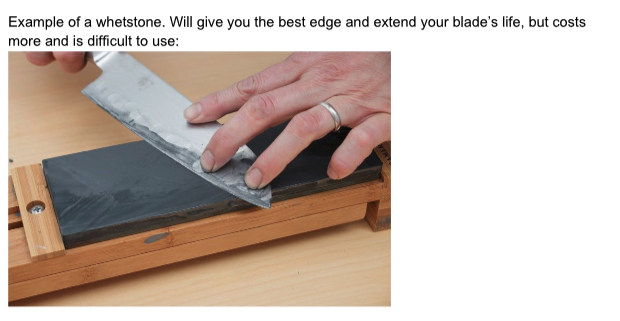
3. Sharpen your knives. Kitchen knives should be sharpened at least once a year, but preferably more frequently. There are a variety of options for sharpening knives, from cheap gadgets you can find at Walmart, to high quality whetstones. The cheaper options will reduce the lifespan of your knife over the more expensive options, but they will keep your knives sharp if used correctly. Alternatively, you can ship your knives off to professional sharpening services, but that option is probably not worth the investment unless you are working with very expensive knives.
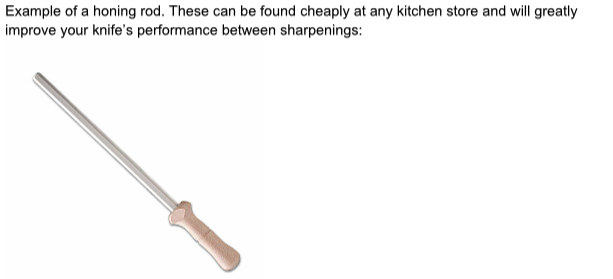
4. Use a honing rod. Honing rods do not directly sharpen a knife, but they do help maintain your knife's edge between sharpenings. Purchasing and learning how to use a honing rod will keep your knives sharper for longer and make it more enjoyable to use.