
Evaluation, Production, and Marketing of ‘Venus’ Sweetshrub PPAF-2003 Report
go.ncsu.edu/readext?452169
en Español / em Português
El inglés es el idioma de control de esta página. En la medida en que haya algún conflicto entre la traducción al inglés y la traducción, el inglés prevalece.
Al hacer clic en el enlace de traducción se activa un servicio de traducción gratuito para convertir la página al español. Al igual que con cualquier traducción por Internet, la conversión no es sensible al contexto y puede que no traduzca el texto en su significado original. NC State Extension no garantiza la exactitud del texto traducido. Por favor, tenga en cuenta que algunas aplicaciones y/o servicios pueden no funcionar como se espera cuando se traducen.
Português
Inglês é o idioma de controle desta página. Na medida que haja algum conflito entre o texto original em Inglês e a tradução, o Inglês prevalece.
Ao clicar no link de tradução, um serviço gratuito de tradução será ativado para converter a página para o Português. Como em qualquer tradução pela internet, a conversão não é sensivel ao contexto e pode não ocorrer a tradução para o significado orginal. O serviço de Extensão da Carolina do Norte (NC State Extension) não garante a exatidão do texto traduzido. Por favor, observe que algumas funções ou serviços podem não funcionar como esperado após a tradução.
English
English is the controlling language of this page. To the extent there is any conflict between the English text and the translation, English controls.
Clicking on the translation link activates a free translation service to convert the page to Spanish. As with any Internet translation, the conversion is not context-sensitive and may not translate the text to its original meaning. NC State Extension does not guarantee the accuracy of the translated text. Please note that some applications and/or services may not function as expected when translated.
Collapse ▲This is a 2003 report from a NC Specialty Crops Program Project. It is posted for historical reference purposes.
Reviewed by Jeanine Davis, NC Alternative Crops & Organics Program, Department of Horticultural Science, NC State University on 10/6/2022.
PROJECT LEADER(S): Thomas G. Ranney, Thomas A. Eaker, and Joel Mowrey
TYPE OF PROJECT: Research and On-farm Trial
LOCATION: Fletcher, NC (State-wide evaluation trials and on-farm trials were also established)
IMPACT
All signs indicate that ‘Venus’ is going to be an extremely successful introduction that will yield North Carolina growers substantial returns. National sales could potentially reach 100,000 to 200,000 units per year. At a wholesale value of $12.50 per plant, annual sales could exceed $2,500,000. Retail value would be twice that amount. There are currently 12 nurseries in North Carolina trialing/producing ‘Venus’. More companies will be impacted as plants move into re-wholesale, garden center, and landscape contracting markets. Initial sales should begin in 2004. Efforts are also underway to establish markets in Europe, Japan, Australia, and New Zealand.
INTRODUCTION
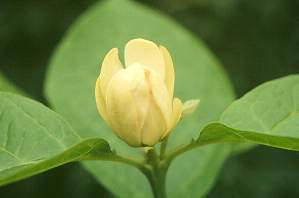
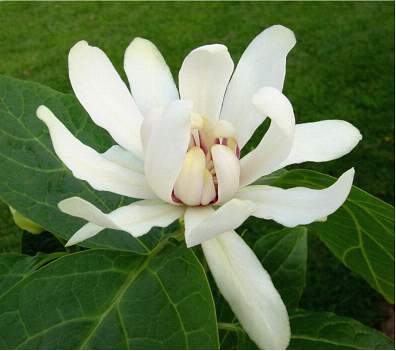
‘Venus’ is an extremely promising new nursery crop that was developed at NC State with support from the North Carolina Association of Nurserymen, The Golden LEAF Foundation, and the J. Frank Schmidt Family Charitable Foundation. This cultivar is an advanced hybrid that has demonstrated excellent adaptability, pest resistance, stress tolerance and exhibits exceptional ornamental features that transcend what has previously been found in sweetshurbs (Figure 1.). ‘Venus’ represents a considerable breakthrough – there is nothing else even remotely similar in the market.
Although ‘Venus’ looks very promising, we needed to develop and refine propagation protocols, develop specific production practices, and propagate stock plants for distribution to growers and for regional trials. Promotional materials needed to be developed and marketing efforts needed to be initiated.
The objectives of this project were to:
Develop propagation protocols.
Propagate and distribute stock plants to North Carolina propagators/growers.
Establish a propagation stock block at the MHCRS for use by NC Nurserymen.
Develop promotional materials and market through trade magazines and industry meetings.
METHODS
Propagation studies were conducted to optimize and refine production protocols. Summer, sub-terminal cuttings were evaluated for rooting potential following treatment of the basal 1” of the cutting, for 5 sec., with a range of auxin (potassium form of indole-3-butyric acid dissolved in water) concentrations. Production demonstrations were developed for tours and field days. A stock block of ‘Venus’ was established to provide North Carolina growers with a source of propagation material. Plants were propagated and distributed to growers. On-farm trials were established with growers across the State.
RESULTS
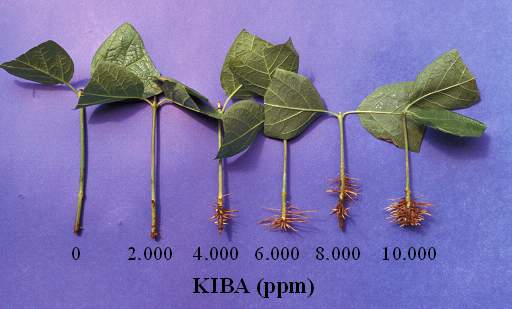
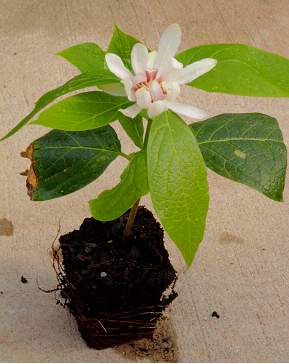
Propagation. Propagation studies found that ‘Venus’ can be produced by summer stem cuttings with the use of supplemental auxin treaments. Rooting increased from 50% with no treatment to 100% when treated with KIBA at concentrations of 4,000 to 10,0000 ppm (Fig. 2). Root number increased linearly with increasing auxin treatment and ranged from approximately 6 roots per cutting for no treatment to over 40 roots per cutting when treated with 10,000 ppm KIBA (Fig. 3). Cuttings develop a strong root system and often bloom after rooting (Fig. 4 and 5). Our current recommendations are to propagate ‘Venus’ using 2-node (strip bottom pair of leaves), firm, subterminal cuttings and treat the basal 1” with 8,000 – 10,000 ppm of KIBA dissolved in water, and place cuttings under periodic mist. Cuttings can be stuck in large celled flats or directly into quart pots with a well drained medium.
Demonstrations and Trials. Container and field production demonstrations have been established at the Mountain Horticultural Crops Research Station. These demonstrations were included in tours for nursery growers. Presentations were also made at the Southern Nursery Association Research Conference, North Carolina Green and Grow ’n’ Show, Southern Plant Conference, Eastern Region International Plant Propagators Meeting, NC State Twilight Field Day, NC State Nursery Short Course, Blue Ridge Horticulture Association meeting, and numerous county extension programs including over 1,400 people. Plants are on display at the North Carolina Arboretum, the J.C. Raulston Arboretum, and at numerous county extension offices. On-farm trials have been established with the following growers and most are now producing this plant:
(these nurseries may no longer be producing this variety or may no longer be in business. This listing was current in 2003)
Appalachian Trees, Hollis Wild
P.O. Box 92
Glendale Springs, NC 28629
336-982-2377
jowild@skybest.com
Camellia Forest Nursery, David Parks
9701 Carrie Rd.
Chapel Hill, NC 27516
919-968-0504
info@camforest.com
Carolina Native Nursery, Bill Jones
1126 Prices Creek Rd.
Burnsville, NC 28714
828-230-6436
bill@carolinanativenursery.com
Clark’s Liner Farm, Debbie Clark
4156 Blue Creek Lane
Oxford, NC 27565
919-692-1020
clarkslinerfarm@hotmail.com
Culture for the Earth, Carol Propest
Tuxedo, NC
828-697-0236
cfpropest@tds.net
Fry Nursery, Richard and Pamela Fry
1016 King Rd.
Pisgah Forest, NC 28768
828-884-6491
Fry_Nursery@yahoo.com
Hawksridge Farms, Inc., Rick Crowder
P.O. Box 3349
Hickory, NC 28603
828-294-2081
rick@hawksridgefarms.com
Highland Creek Nursery, Brian Upchurch
269 Drake Farm Rd.
Fletcher, NC 28732
828-687-0996
hcnsy@bellsouth.net
Meadowbrook Nursery, Jamie Oxley
2055 Polly Spout Rd.
Marion, NC 28752
828-738-8300
wedu@wnclink.com
Silverfox Nursery, Kelly McCartney
2360 Brannon Rd.
Horseshoe, NC 28742
828-712-0482
kmccartney@peoplepc.com
Tarheel Native Trees, Sam Allen
4339 Peele Rd.
Clayton, NC 27520
919-553-5927
jill.allen@worldnet.att.net
Old Courthouse Nursery, Sean Gurkin
323 Old Courthouse Road
Warsaw, NC 28398
910-293-9374
Stock block. A stock block of 50 ‘Venus’ shrubs has been established at the Mountain Horticultural Crops Research Station. These plants will be available as a source for propagation material for North Carolina nurseries.
Distribution of Stock Plants. Over 500 plants were propagated and distributed for stock plants and for evaluation. In addition to distributions to NC growers, plants have been sent to institutions (Universities, Arboreta, etc.) around the country for promotion and evaluations.
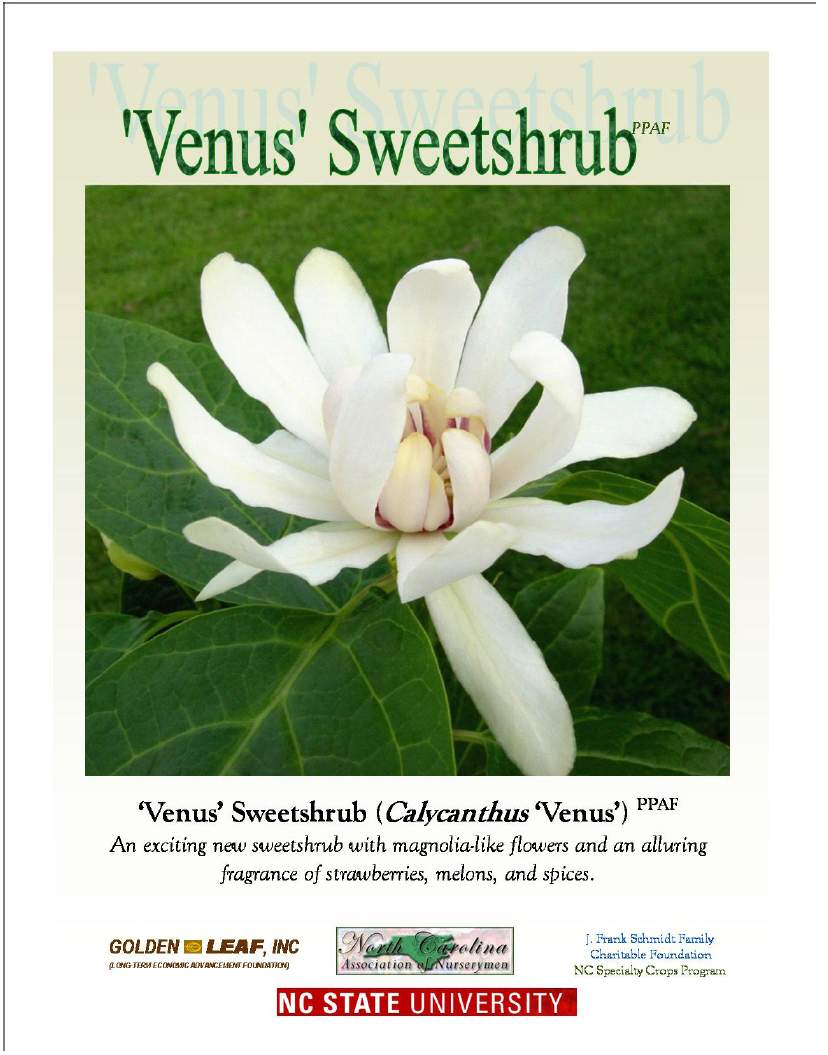
Promotional materials. Images and slides of ‘Venus’ have been distributed and are available upon request. Posters and flyers have been developed and distributed to producers (Fig. 6).
CONCLUSION
Initial results look very promising. There is considerable excitement about this plant. However, the ultimate success of this plant will depend on its performance in nurseries and landscapes around the world over the next few years.
Photos
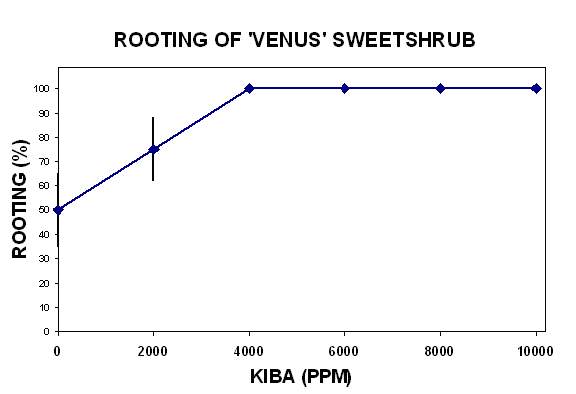
Figure 1. ‘Venus’ Sweetshrub PPAF – in flower and bud.
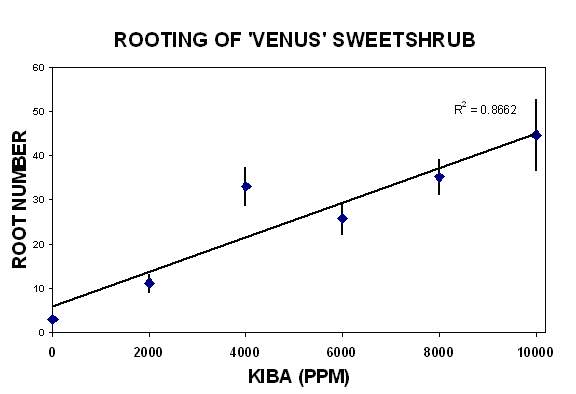
Figure 2. Rooting percentage as a function of auxin treatment (potassium form dissolved in water). Symbols are means, n=12, &plumn; 1 SEM.